Hair Extension Heat Protection Tips: How to Prevent Heat Damage for Good
Heat styling and extensions can absolutely coexist. But treating them exactly like your natural hair? That's where things go wrong. Extensions are fundamentally different from your own hair in one critical way, and once you understand it, every heat protection decision becomes obvious.
To prevent heat damage on hair extensions, always apply a heat protectant spray from mid-length to ends before using any hot tool, keep temperatures between 150°C and 185°C, and never style damp extensions. Human hair extensions have no scalp connection and no natural oil supply, so they need more protection than your own hair. Not the same amount.
Why Extensions Are More Vulnerable Than Your Natural Hair
Your scalp produces sebum, a natural oil that travels down each hair shaft and conditions it from root to tip. It's your hair's built-in protective barrier.
Extensions, whether clip-in extensions or semi-permanent bonds and tapes, have no scalp connection. That means no sebum. None. Every time you apply heat without adequate protection, you're exposing already-dry strands to high temperatures with no buffer in place.
The cuticle lifts, moisture escapes, and the hair becomes progressively more brittle with each styling session. Unlike your natural hair, extensions can't regenerate. Cumulative damage is the real risk, and it creeps up quietly. This is why 'just use a heat protectant' isn't enough on its own. The how and the how often matter just as much.
Set the Right Temperature Before You Even Pick Up the Tongs
Using the wrong temperature is where most extension wearers cause invisible, early-stage damage. Too hot and you burn the cuticle. Too cool and you style for longer to get the result, which creates the same problem differently.
For human hair extensions, professional stylists recommend the following ranges:
-
Blow dryer: 150°C to 180°C (low to medium heat setting)
-
Straighteners: 160°C to 185°C
-
Curling tongs: 130°C to 180°C
-
Heated rollers: 100°C to 130°C
If your tool has no temperature control, it's likely running too hot for regular extension use. A professional-grade tool with a digital display is worth the investment. Your extensions will last significantly longer.
One non-negotiable rule: only style completely dry extensions. Heat on damp hair doesn't just risk cuticle damage. On semi-permanent extensions, it can weaken the bonds themselves, leading to premature shedding. You'll find more on protecting bonds and tapes in our complete extension aftercare guide.
How to Apply Heat Protectant Properly (Most People Get This Wrong)
The instinct is to spray and go. But application technique matters more than most people realise, especially with extensions.
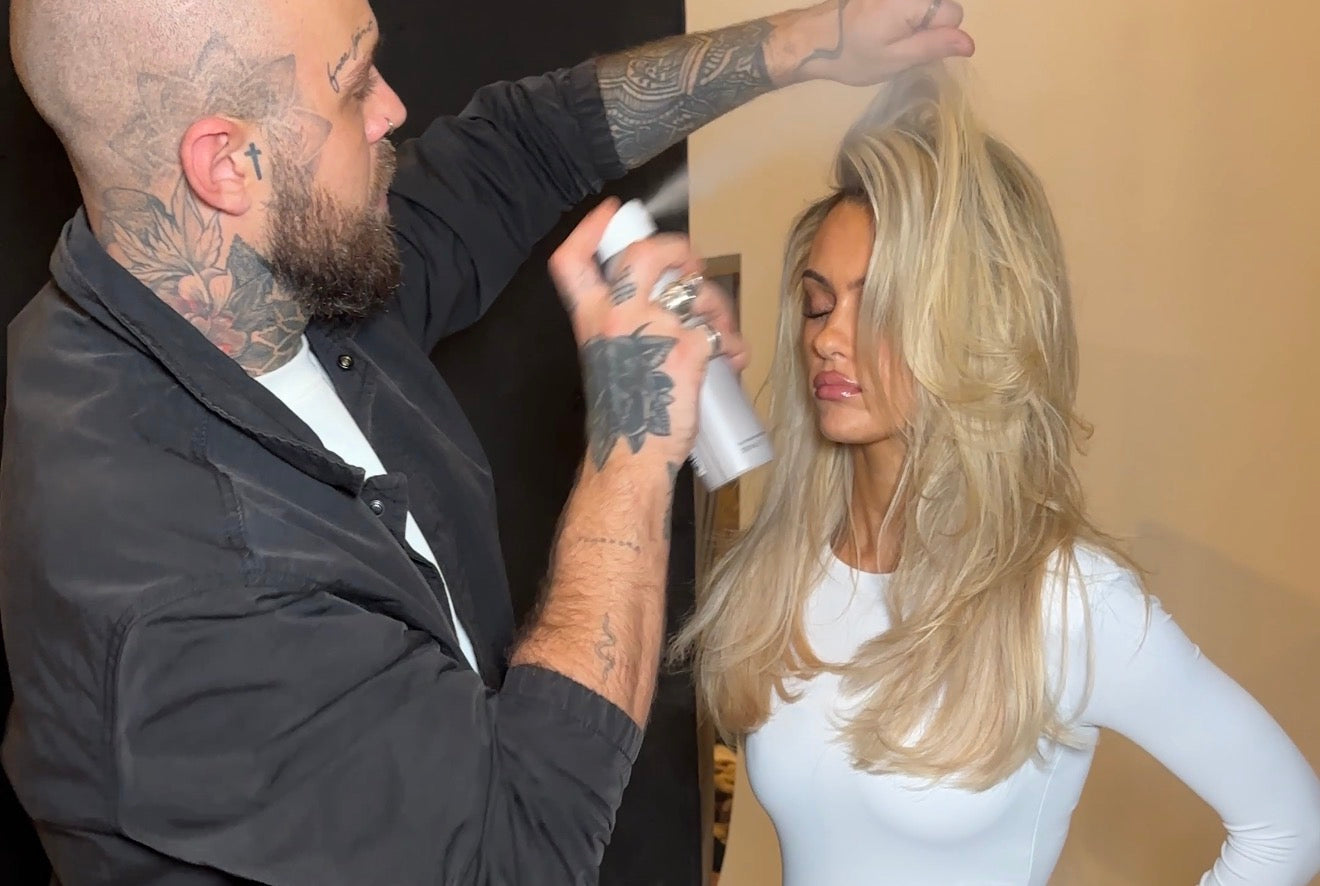
Section the hair first. Hold your weft or extension away from the scalp and mist the protectant from mid-shaft down to the ends. Avoid the roots. Product build-up near the roots can loosen clip grips or weigh down bonds over time. Then comb through with an extension-safe detangling brush to distribute evenly before picking up your hot tool.
For extensions specifically, a lightweight spray formula is best. Look for silicones such as dimethicone, which form a thin heat-barrier layer across each strand, plus argan oil or keratin to reinforce the hair shaft. Avoid anything with high alcohol content. Alcohol dries extensions out further, which is the opposite of what you need.
Mild surface damage can often be partially addressed with a bond-repairing treatment. At Curated, we recommend K18 Leave-In Molecular Repair Hair Mask as a weekly leave-in for all extension wearers, and especially for anyone who heat styles regularly. Shampoo, towel-dry, apply K18, skip the conditioner, leave it in.
What Heat Damage on Extensions Actually Looks Like
Catching damage early is the difference between a quick fix and replacing your extensions entirely.
Early signs: the hair feels rougher than usual when you run your fingers through it, loses its natural shine, or starts to tangle more between washes. Hold a strand up to the light — heat-stressed extensions often look slightly dull or frizzy at the ends even when freshly styled.
Advanced signs: split ends that won't brush smooth, a coarse texture throughout the length, and in more severe cases a slightly gummy feel near the bonds on semi-permanent extensions. If the bonds themselves feel sticky or misshapen, stop using heat and get in touch with the Curated team. That level of damage needs proper assessment, not a home remedy.
When to Skip the Heat Entirely
Not every style needs hot tools. And on the days you go heatless, your extensions get a chance to recover.
Overnight braiding creates natural-looking waves by morning with zero heat exposure. A loose plait before bed gives soft body and texture without any tool. If you're styling with heat daily, try building in at least two or three heatless days per week. Extensions that get daily heat without regular breaks will show wear significantly faster than those that get time to rest.
On heatless days, finish with a few drops of lightweight hair oil on mid-lengths and ends. It replaces what scalp sebum would normally provide, keeps the hair hydrated, and reduces the friction that leads to breakage over time.
Protecting Your Investment
Great hair days don't require sacrificing your extensions' long-term health. The right heat protectant, the right temperature, and completely dry hair before you style. Get those three things consistently right and your extensions will look beautiful for significantly longer. Explore our clip-in extensions and fillers to find the right piece for your hair.